STARLINK - BRAZIL (Global Campaign)
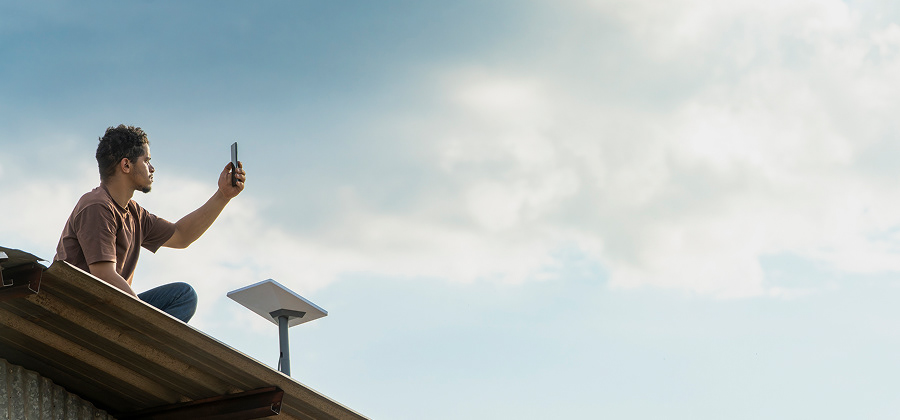
This project was part of Starlink’s global campaign to introduce the new Starlink Mini, and our challenge was clear from the beginning: create a film rooted in a real Brazilian story while respecting the technical precision required to feature a complex hardware product in the field.
The direction of this film was a partnership between Filipe Redondo and Fernando Salgado, and the narrative we built centered on João Paulo, a worker at the coffee farm Ilha do Ar, in Minas Gerais. Starlink asked for a story that demonstrated real, practical impact — not concepts, not abstractions — so our pre-production began with researching true cases where connectivity had already changed people’s routines. Among several candidates across the country, Minas became the strongest choice: technically viable for the new Mini (unlike heavily forested regions, where the signal would be obstructed), visually compelling, and emotionally grounded in a community where connectivity genuinely transforms daily work.
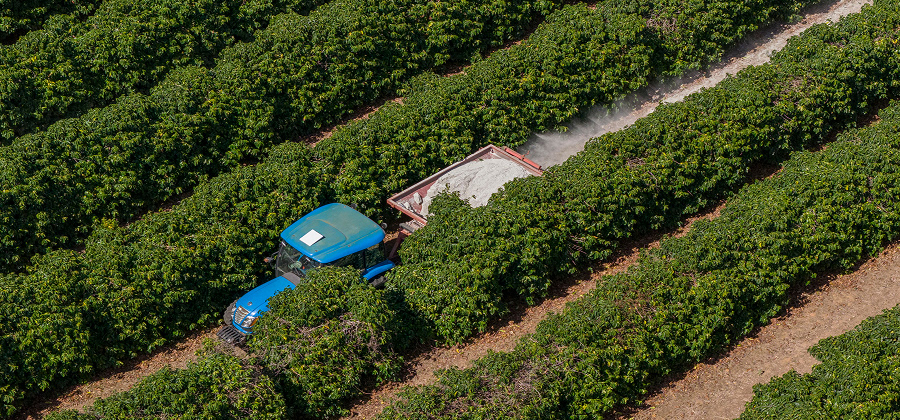
The story reveals how João Paulo moves through the harvest: from preparing the plantation and operating machinery to coordinating processes that once isolated him from the outside world. The Starlink Mini allowed him to stay connected while working deep in the fields — bringing efficiency, safety, and quality of life. The emotional arc stays subtle, real, and honest: the desire to stay connected, and the relief of finally being able to do so.
From a technical standpoint, this was one of the most demanding branded content productions we have done. The Mini had strict requirements:
– the dish needed to maintain a specific angle
– cable placement had to be visible and accurate
– installations on tractors and harvesters required engineering improvisation
– and the product had to remain clean and identifiable, even in environments full of dust and red soil.
– the dish needed to maintain a specific angle
– cable placement had to be visible and accurate
– installations on tractors and harvesters required engineering improvisation
– and the product had to remain clean and identifiable, even in environments full of dust and red soil.
We shot with a lean crew, operating in two environments — the farm and the residential house — and balancing handheld, stabilized, and drone cinematography depending on the emotional and functional needs of each scene. Natural light dictated much of our schedule, demanding tight planning around the movement of the sun to preserve consistency throughout the harvest rows.
We shot with a lean crew of five, operating in two environments — the farm and the residential house — and balancing handheld, stabilized, and drone cinematography depending on the emotional and functional needs of each scene. Natural light dictated much of our schedule, demanding tight planning around the movement of the sun to preserve consistency throughout the harvest rows.
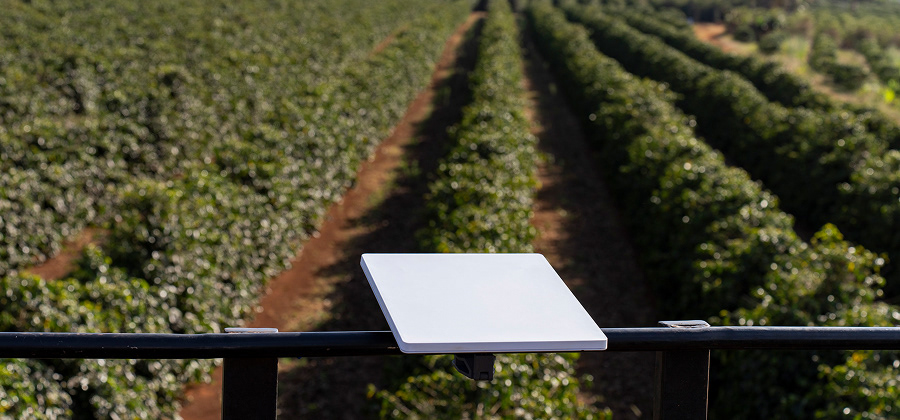
Despite logistical challenges, including shipment delays caused by a national strike and unpredictable weather, the support of the farm’s team was essential. They held part of the harvest specifically for our shoot, ensuring authenticity while giving us the time to plan each machine setup and installation correctly.
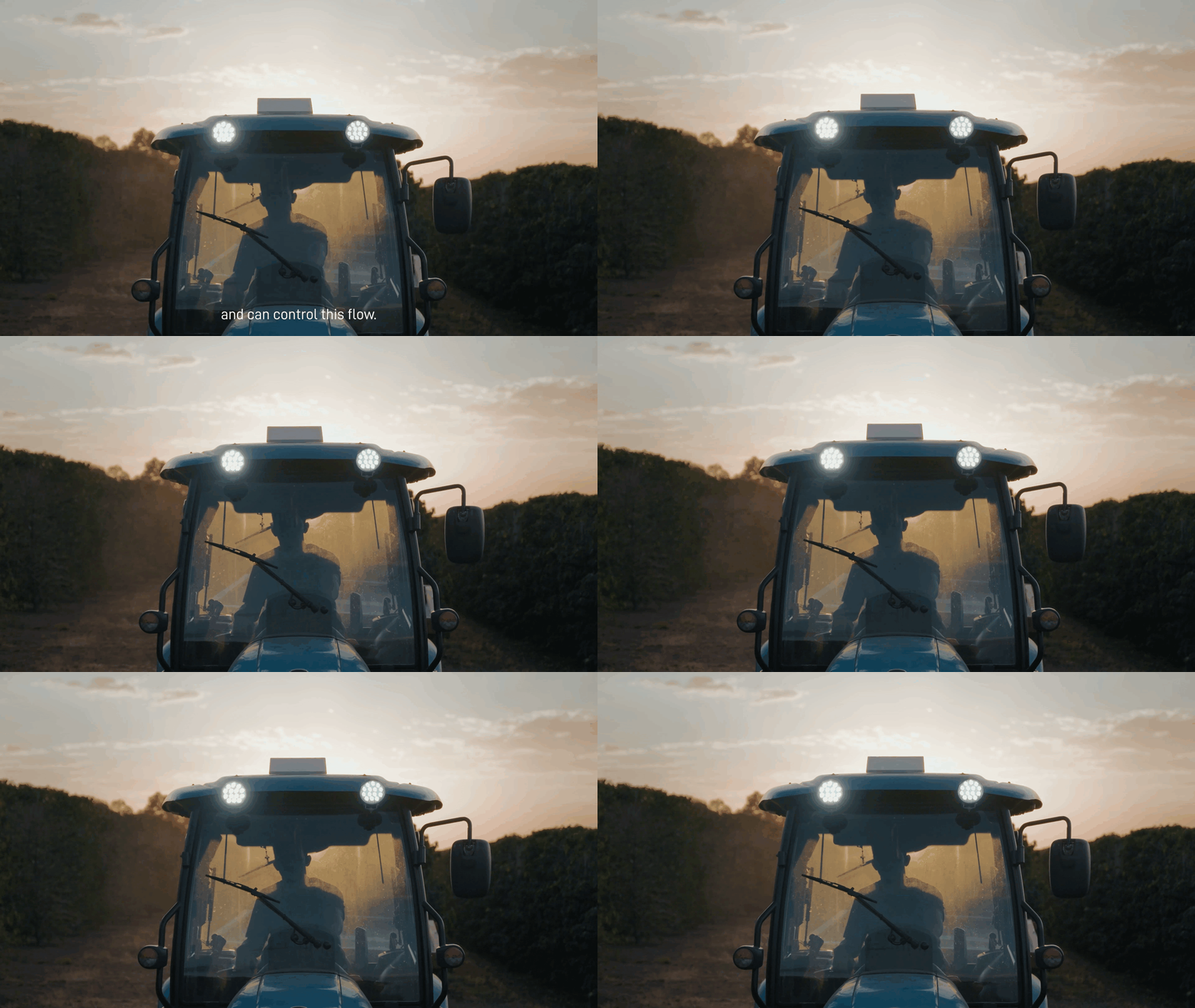
In the end, the campaign extended beyond expectations. Starlink approved the film for global use and invited us to direct the next project in Colombia — a sign of trust and a recognition of how we balanced technical accuracy, human storytelling, and cinematography.
This project taught us what all great documentary-driven branded films confirm:
the story already exists — our job is to reveal it with truth, rigor, and craft.
the story already exists — our job is to reveal it with truth, rigor, and craft.